You are here: Home » Body » Tummy Tuck (Abdominoplasty) Surgery Miami
Tummy Tuck Surgery (Abdominoplasty) Miami
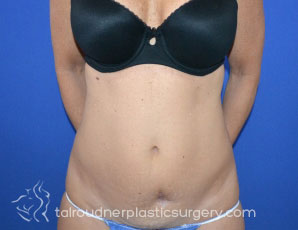
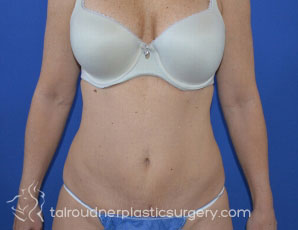
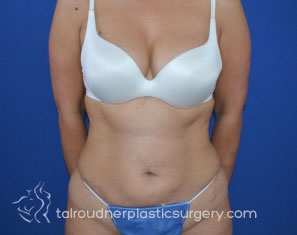
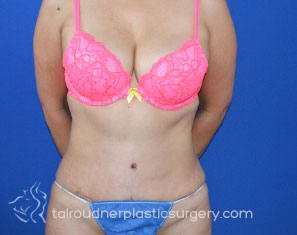
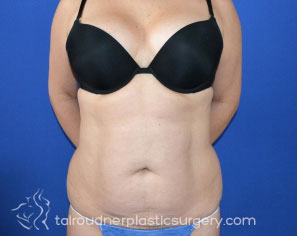
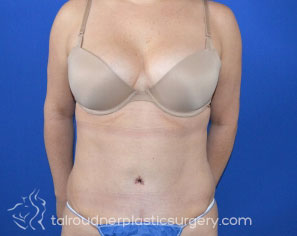
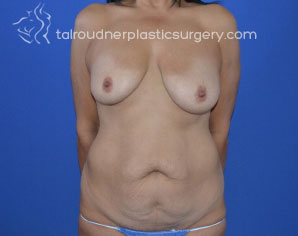
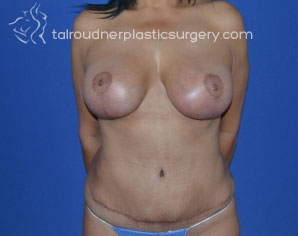
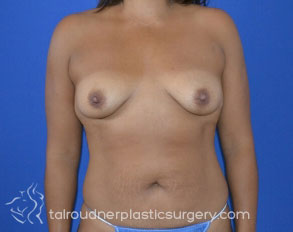
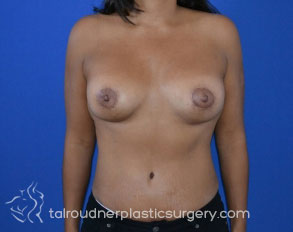
Dr. Tal Roudner is a board certified plastic surgeon and specialist in Tummy Tuck surgery, also known as Abdominoplasty. Dr. Roudner’s surgical goal is to revive the youthful appearance of the abdomen by restoring the shape, curves and tightness of the abdomen while minimizing visible scars.
What is a Tummy Tuck?
A Tummy tuck is a cosmetic procedure used to create a firm and contoured abdomen. The surgery involves the removal of excess skin and fat from the abdomen as well as tighten the muscle and fascia of the abdominal wall.
According to the American Society of Plastic Surgeons, in their cosmetic national data bank statistic reports of 2010, tummy tuck (abdominoplasty) was performed in 116,352 patients that year. That is a 1% increase from 2009 and a 86% increase from 2000.
Dr. Roudner may perform a series of different procedures while removing excess skin and fatty tissue such as: repositioning the belly button (umbilicus), performing liposuction of the flanks and plicating the anterior abdominal wall fascia.
Contact our Miami surgical center to request a free consultation regarding your tummy tuck procedure with Dr. Tal.
The aesthetic goals of a tummy tuck procedure (abdominoplasty) are to improve contour of the abdominal wall, to minimize scarring, and to maintain a natural-appearing “belly button” (umbilicus). The reconstructive goals are to re-establish the appropriate anatomy of the muscular layer and to prevent recurrence of hernias and laxity of the abdominal wall. Ideally to improve the overall contour and restores the structural integrity of the abdominal wall the surgeon will perform a maximal but safe resection of excess skin as well as a sufficient volume reduction of subcutaneous fat he will also perform tightening of the abdominal wall laxity as needed.
The female body habitus follows a gynoid or “hourglass” shape. It is narrow at the waist and wider at the hips with fat accumulation in the lower trunk, hips, thighs, and buttocks. Ideally, the female waist-to-hip ratio is approximately 0.7. The abdomen has small fullness just above the pubis with a scaphoid contour from just below the umbilicus to the costal margin.
The ideal male trunk contour has an android pattern, becoming narrower with descent from the chest to the hips in a V shape. The anterior abdomen is flat with indentations visible at the transcriptions of the muscle and along the midline. Fat accumulation tends to occur circumferentially around the abdomen and flanks.
Patients seek treating the trunk region for various reasons most commonly due to fat accumulation when their calorie intake exceeds the calorie expenditure. During pregnancy, significant abdominal wall stretching can occur, leaving stretch marks (striae) in locations where the dermis of the skin has been disrupted. After pregnancy (Post partum) or after weight loss, the skin may remain flaccid/lose with a significant loss of elasticity. Women demonstrate weight gain in the region of the lower trunk and hips; in men, excess fat is seen primarily with an increase in abdominal girth.
The change in the quality of the skin, often referred to as cellulite, is indentations or “dimpling” of the skin at areas of fibrous attachments and is more common in women. It is most frequently seen in the region of the posterior thigh.
Protrusion of the abdominal wall at the midline between the right and left rectus abdominis muscles represents weakness of the fibrous tissues connecting the muscles (linea alba) and is known as a diastasis recti. It can present after increased intra-abdominal volume and may occur in conjunction with an epigastric hernia.
Prepping for Tummy Tuck surgery at our Miami surgical center
Prior to surgery Dr. Roudner will evaluate the patient according to the preoperative classification system in order to decide which type of procedure will be the most appropriate to perform.
Preoperative Classification System
Type I
Patient is typically younger, with good skin elasticity and isolated abnormal fat distribution (lipodystrophy). Good muscle tone and no abdominal wall separation/laxity (diastasis).
Type II
Patient is one who usually has had at least one pregnancy. There is mild lower abdominal laxity and muscle separation (diastasis recti). Abnormal fat distribution (lipodystrophy) is mild to moderate and most notable inferior to the belly button (umbilicus).
Type III
Patient has muscle wall laxity including separation (diastasis of the rectus muscles). The redundant skin and abnormal fat distribution (lipodystrophy) is significant, particularly below the belly button (umbilicus). Significant stretch marks (striae) after multiple pregnancies.
Type IV
Patient has severe upper and lower flaccidity/laxity of skin and muscle with excess fat throughout. Muscle wall laxity including separation (Diastasis recti) is significant to severe, and the patient is often mildly to moderately obese. The belly button (umbilicus) may be located below the ideal location with relationship to the iliac crest.
Preoperative evaluation will include examination for respiratory, urinary, and bowel diseases because these can contribute to the formation of acquired hernias such as true ventral hernias from postoperative incisional hernias and exacerbation of congenital epigastric and umbilical hernias that will need to be corrected. The abdominal exam will also be performed to identify any: infectious processes such as infection of the bully button (omphalitis) that results from poor hygiene and resolves with cleaning and local care of the belly button (umbilicus). Both benign and malignant tumors should be ruled out prior to surgery as well as cutaneous neoplasms and sarcomas, which are uncommon and are best treated by surgical excision. The patients medical history will be evaluated as well as medications and allergies. A medical clearance will be obtained from the primary care physician in patients that require clearance prior to surgery. Patients that are over weight according to BMI (Body Mass Index) values will be placed on a dietary and exercise program in order to attain a proper weight prior to surgery.
What to expect form tummy tuck surgery
Dr. Roudner will perform surgery according to the evaluation he performed in the preparations prior to surgery. The procedures described below are used according to the classifications described above in the preparation section.
Aesthetic abdominal procedures
Type I
The deformity can usually be treated with liposuction alone. Several small access incisions in the belly button (umbilicus), at the top of the pubic hairline, and laterally within the bikini or underwear line. Care is taken to avoid intra-abdominal penetration. Standard liposuction, ultrasonic suction and power-assisted suction can be used.
Type II
A mini-tummy tuck (mini-abdominoplasty), combines minimal-length abdominal incisions to allow resection of redundant infra-umbilical skin, it is suitable for type II deformities and includes conservative liposuction with resection of the lower abdominal skin. Variable sharp resection can be combined with liposuction to remove fat. Dissection along the midline below the belly button (umbilicus) allows tightening of muscle laxity. The umbilical stalk is preserved.
Type III
A modified-tummy tuck (modified-abdominoplasty) involves elevation of a skin flap from the pubis to the subcostal margin and is indicated for type III patients. The belly button (umbilicus) is detached from the fascial (layer of fibrous tissue) midline, and the upper abdominal laxity is removed. The belly button (umbilicus) is lowered, but care must be taken to avoid lowering it to an unnaturally lower location. The redundant lower skin margin is resected/removed. Fat resection is performed sharply rather than by liposuction. The fascial (layer of fibrous tissue) midline is tightened to address muscle laxity both above and below the belly button (umbilicus). The wound is closed in layers with the patient in the semi-Flexed position to avoid any tension at closure. Closed suction drains and compressive dressings are used.
Type IV
Standard abdominoplasty requires aggressive elevation of the upper abdominal flap to the level of the subcostal margin. A resection of the entire skin flap inferior to the belly button (umbilicus) is performed. Liposuction is avoided because the risk for flap necrosis (skin death) is greatly increased.The belly button (umbilicus) must be transposed. It is detached from the abdominal skin and left attached to the underlying fascia. A semi-Flexed sitting position is used to facilitate resection of the skin up to the level of the original belly button (umbilicus). Attempt to preserve a layer of subcutaneous lymphatic tissue over the fascia decreases the incidence of seroma (fluid collection) formation. The fascial (layer of fibrous tissue) midline is tightened to address muscle laxity both above and below the belly button (umbilicus). The skin is temporarily closed with staples, leaving enough room to palpate the umbilical stalk and transpose its location to the neo-umbilical wall. A mark is placed, and the location of the new belly button (umbilical) window is checked to ensure that it is in the midline and that it is properly positioned in relationship to the iliac crest, xiphoid, and pubis.
Modern Abdominoplasty
Type II and type III and even some type IV, with appropriate management aggressive liposuction of the abdomen and flanks, including the infraumbilical region is performed. Resection is performed in a small area below the umbilicus. Undermining is limited to the midline in a 4- to 5-cm region from the upper portion of the resection to the xiphoid. The umbilical attachments can be preserved or released, depending on the location of the umbilicus and the exposure required. Resection of the skin is limited to a small area above the pubis.
Simple panniculectomy is effective to address the lower abdomen, particularly in patients who have medical comorbidities that prohibit lengthy surgery.
Midline scar can be used to make a vertical midline incision to tighten the upper waist and flanks in the horizontal direction. Vertical tightening can be obtained by use of the circumferential belt dermolipectomy which improves the upper thigh, buttock, and upper abdomen.
Anesthesia used for tummy tuck surgery
The procedure is performed under General Anesthesia.
Length of time for tummy tuck surgery
The procedure can take on average between two to four hours depending on the size and weight of the patient.
Recovery time after tummy tuck surgery
The patient needs two weeks of work to recover after a tummy tuck procedure and will take a full six weeks prior to return to full normal activities.
Additional information regarding tummy tuck surgery
A retrospective analysis of complications associated with combined abdominoplasty and lipoplasty in a single practice: Rates of minor complications (seroma, hematoma, dehiscence, infection, dog-ear) were not significantly different in the abdominoplasty alone cases (11/57; 19%). as compared to the abdominoplasty, plus lipoplasty cases (50/349; 14%). complication rates in patients subdivided according to amount of material removed were not significantly different, and no specific complication was significantly more common in patients receiving lipoplasty. addition of suction-assisted lipoplasty is not consistently associated with increased morbidity in patients receiving abdominoplasty. They credit their low complication rates to improved methods for hemostasis, efficient operative times, improved pain-management, and early ambulation. They also highlight the importance of lower extremity sequential compression devices to reduce the risk of deep-vein thrombosis and pulmonary embolism.